The Suri Core 1.0 Sonic Toothbrush: Evaluating Simplicity, Sustainability, and Operational Value
The personal care market frequently sees consumer electronics become overloaded with features. Electric toothbrushes in particular often arrive equipped with Bluetooth connectivity, companion smartphone applications, multi-zone tracking, and extensive arrays of operational modes. For many users, however, complex software integration and dozen-option menus introduce unnecessary friction to a basic daily task. Many individuals find themselves ignoring high-tech additions, relying instead on single-button operation and consistent battery life, especially when bathroom charging outlets are limited.
The Suri Core 1.0 arrives as an intentional counterweight to this trend. Designed as a streamlined, no-frills alternative within the brand’s lineup, the Core 1.0 strips away non-essential digital extras in favor of core sonic cleaning, lower-impact materials, and straightforward operation. By scaling back certain hardware elements found in premium tiers, the device seeks to offer a lower-cost entry point without compromising essential functionality.
Design and Material Modifications
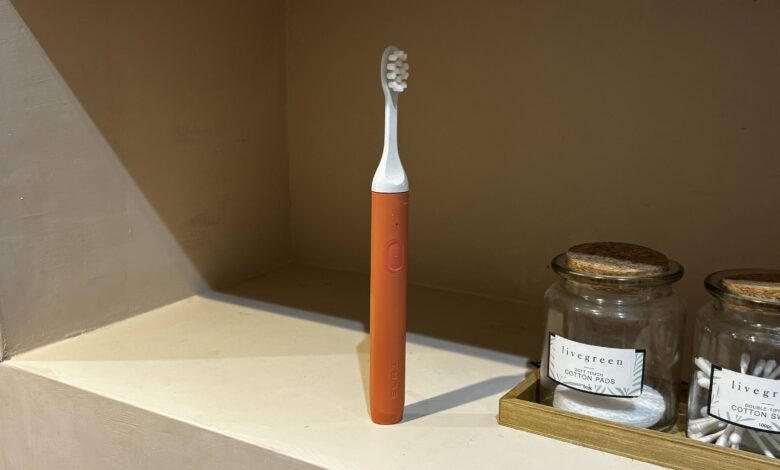
To reduce manufacturing costs and lower the retail price point compared to its flagship offerings, Suri modified several structural components in the Core 1.0. The primary body transitions from the metal enclosure used in the brand’s Pro line to a lightweight bio-plastic constructed from renewable sources and recycled content. While this material shift subtly alters the tactile feel in hand compared to cold-touch metal, it maintains a clean, pastel aesthetic designed to blend easily into standard bathroom environments. Regardless of the body color chosen, the brush heads remain standard white.
The packaged accessories reflect a similar effort to minimize unnecessary hardware. Rather than including an active cleaning and charging travel case like the higher-tier Pro model, the Core 1.0 comes with a basic protective travel cap for the brush head. Storage is handled via a minimal magnetic mirror-mount attachment, which allows the toothbrush to be stored vertically off counter surfaces directly on glass or tiled walls.
Environmental Lifecycle Considerations
A central element of the Suri platform is its focus on reducing single-use plastic waste typical of replaceable electric brush heads. Conventional heads frequently end up directly in municipal landfills due to mixed-material construction that standard curbside programs cannot process. The Core 1.0 integrates into Suri’s broader waste-reduction framework through dedicated recycling initiatives.
In both the United States and the United Kingdom, the manufacturer runs a prepaid mail-back system. Consumers can accumulate worn heads and return them directly to the company using provided shipping channels. These collected components are processed and recycled into secondary plastic consumer goods, such as soap dishes. Additionally, the device is supported by a warranty structure under which the company repairs and returns malfunctioning units at no expense to the user, discouraging premature disposal of the internal electronics and battery.
Operational Performance and Battery Endurance
At its core, the toothbrush relies on a sonic motor capable of delivering 28,000 movements per minute. While this represents a slight step down from the 30,000 movements per minute produced by the company’s Pro series, the cleaning power remains robust enough for effective daily plaque removal across its two primary operational modes: Clean and Polish.
Power management is structured around a rechargeable internal battery rated for up to 28 days of regular use on a single charge via a USB-C charging stand. This extended runtime makes the device practical for users who lack dedicated bathroom power outlets or who travel frequently without wanting to pack auxiliary charging stands.
Brushing duration is governed by an integrated, non-adjustable two-minute timer. The device incorporates a haptic pacing system that produces brief pause signals every 30 seconds, indicating when the user should transition to the next quadrant of the mouth. Once the full two minutes have elapsed, the motor automatically shuts off to prevent over-brushing.
Hardware Comparison: Core 1.0 vs. Pro Tier
Understanding the distinctions between Suri’s entry-level and premium offerings requires examining how functional reductions impact price and daily usability. The structural and technical differences between the Core 1.0 and the Pro range illustrate where efficiency savings were achieved.
| Feature / Parameter | Suri Core 1.0 | Suri Pro Range |
|---|---|---|
| Retail Price | $75 / £65 | $99 / £85 |
| Body Material | Bio-plastic (recycled/renewable) | Metal |
| Motor Speed | 28,000 movements per minute | 30,000 movements per minute |
| Battery Life | 28 days | 34 days |
| Included Case | Protective brush head travel cap | Clean-and-charge travel case |
Functional Limitations and Considerations
While the simplified feature set serves users seeking straightforward operation, certain design choices introduce operational trade-offs that prospective buyers should evaluate.
First, the interface lacks a dedicated low-intensity or sensitive mode. Users with hyper-sensitive teeth, exposed roots, or fragile gum tissue may find the fixed intensity of the Clean and Polish modes too firm. Furthermore, the built-in mechanical pressure sensor requires noticeable physical force to activate. If a user relies heavily on automated warnings to prevent pushing too hard against enamel, the high threshold on this sensor could potentially lead to overly aggressive brushing before registering a alert.
Acoustic output is another factor. In active operation, the sonic motor registers approximately 69 decibels. While typical for higher-powered sonic motors, this sound level is noticeable in quiet indoor settings. Finally, because the unit relies entirely on micro-vibrational sonic motion, it offers a different cleaning feel than oscillating or rotating brush heads, such as those made by Oral-B, which physically spin to clean tooth surfaces.
Market Position and Overall Value
Priced at $75 in the US and £65 in the UK (with Australian availability pending), the Suri Core 1.0 occupies an intermediate space within the electric toothbrush market. It carries a higher price tag than basic entry-level models like the Ordo Sonic Lite, but sits comfortably below premium sonic alternatives and Suri’s own $99 / £85 Pro series.
The practical value of the Core 1.0 depends on what a consumer expects from an electric toothbrush. By removing costly additions like smart apps, complex digital displays, and specialized travel cases, the device delivers essential sonic cleaning capabilities alongside concrete sustainability programs. For individuals looking for reliable battery life, straightforward controls, and closed-loop head recycling without paying a premium for unnecessary features, the Core 1.0 represents a practical, functional balance of cost and utility.